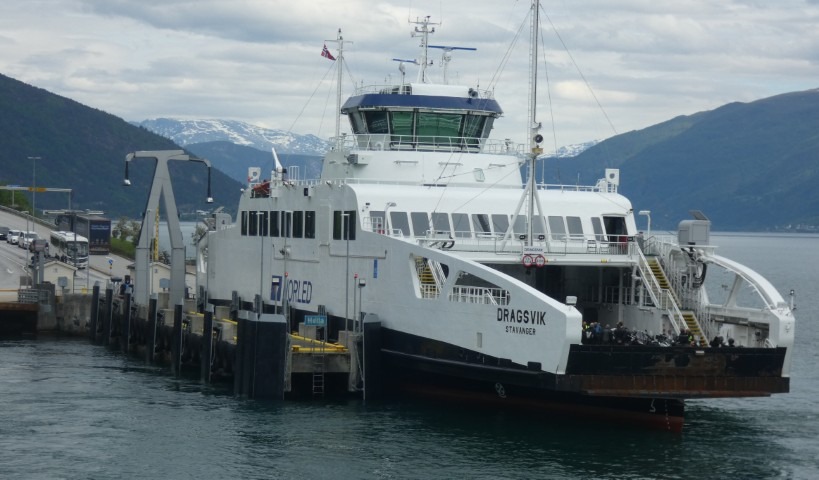
Figure 1; The car ferry MF Dragsvik at Hella on the Dragsvik to Hella and Vangsnes route on the Sognefjord. (Photograph: David Murray-Smith)
Norway now operates more than 100 battery-electric and hybrid ferries for passengers and vehicles and many of these ferry routes are in the west of the country. I spent a week in June on the Sognefjord and was able to travel on a number of routes where battery-electric ferries are operating, including the Lavik to Oppedal route where the first of these vessels (the MF Ampere) began operating in 2015. That first 1598 tonne vessel was the precursor for later designs. It is 79m long with a beam of 21m and is capable of carrying 120 cars and 296 passengers. Lithium-ion batteries supplied by Corvus Energy provide a storage capacity of 1000 kWh and are recharged briefly at each port of call with a full recharge when ferries are not in operation during the night. Integration of the complete electrical systems is by Siemens.
Being based on holiday in the village of Balestrand, I was able to experience operations on the local triangular route from Dragsvik to Hella and Vangsnes on a number of occasions. A full service of battery-electric ferries started there in May 2023 but the ferries used, as can be seen from Figures 1 and 2, are not identical, having been built at different times. They are all very quiet and comfortable vessels and, remarkably for the short crossings of between 10 and 20 minutes they have large panoramic lounges on the level above the car deck and also a refreshment counter at that level.
Charging during the short stops, which are typically of ten minutes duration, is a highly automated procedure. Gantries on the quayside (Figure 3) provide electrical connections from on-shore storage batteries to provide rapid charging at high power levels. The connection process begins as soon as the vessel is stationary with the connectors dropping down to couple automatically to the vessel’s electrical system. When the vessel is about to depart the system uncouples itself, without human intervention, and the connector rises again on the gantry.
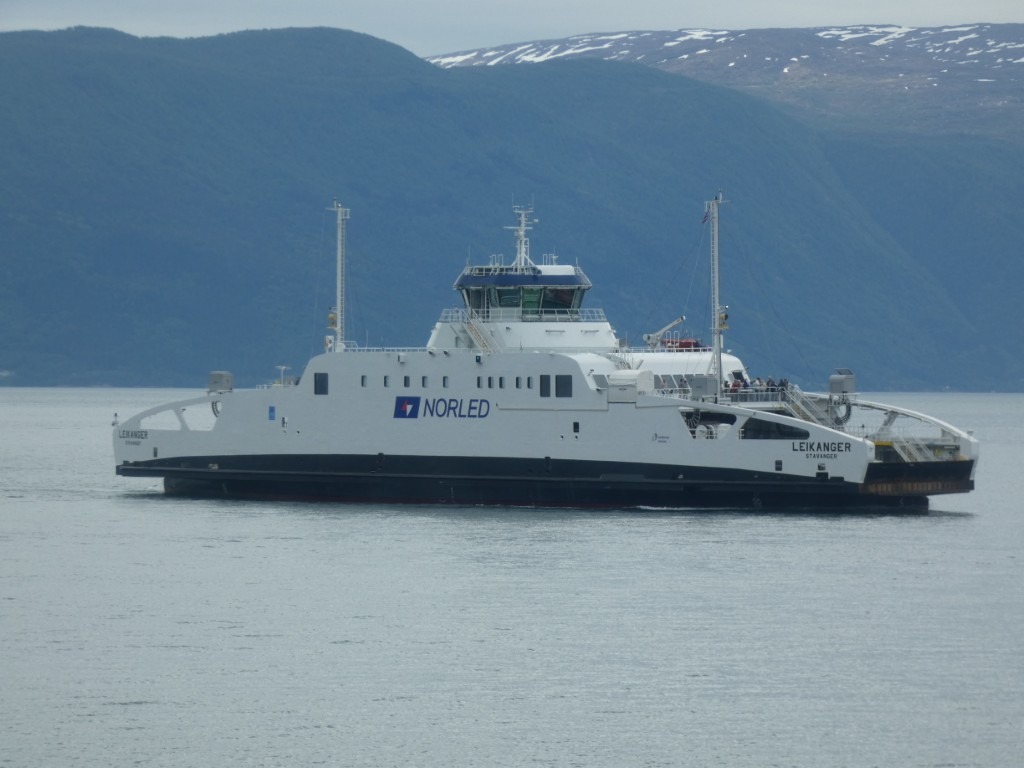
Figure 2: the car ferry MF Leikanger approaching Hella on the crossing from Dragsvik. (Photograph: David Murray-Smith)
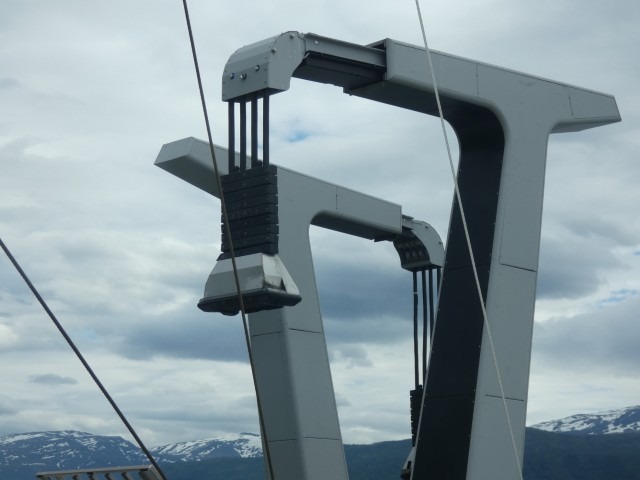
Figure 3: Coupling systems for on-shore automated charging. This example is at Hella, in this case capable of charging two ferries in adjacent docks.(Photograph: David Murray-Smith)
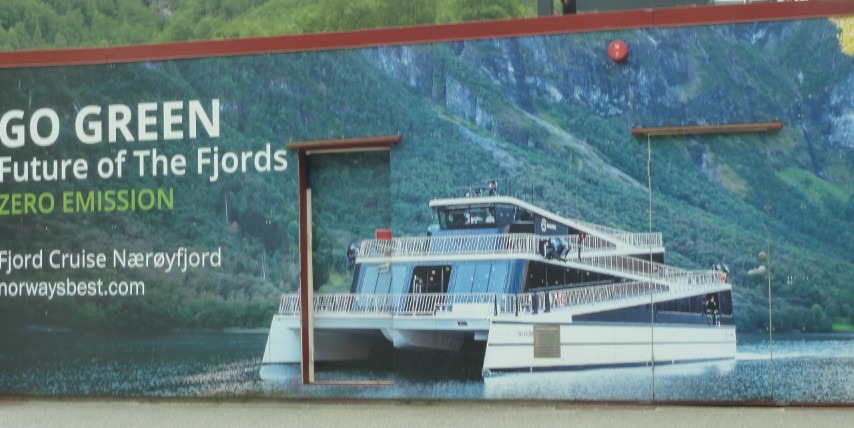
Figure 4: Large poster occupying one whole side of a port building in the village of Fläm advertising the green credentials of a local fjord cruise by the futuristic catamaran “The Fjords”. (Photograph; David Murray-Smith)
Battery-services are also to be found on some passenger vessels that provide fjord cruises. One example is on the Gudvangen to Fläm route where two modern 400 passenger battery-electric catamarans operate (Figures 4 and 5). These are very comfortable vessels, built locally and, like the Fläm railway, provide part of the well-known “Norway in a Nutshell” tourist experience.
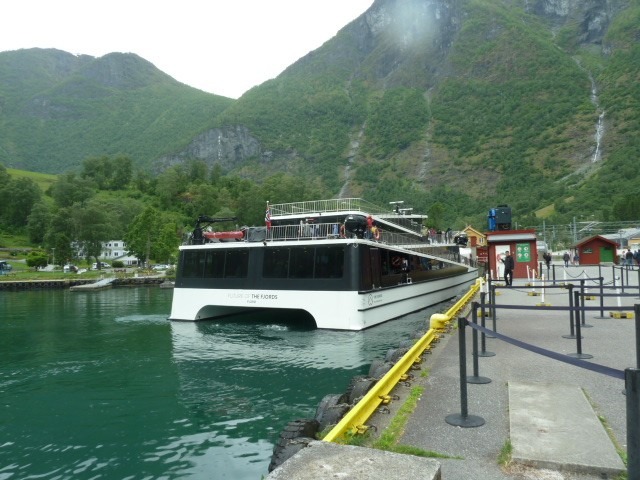
Figure 5; View of the stern of the catamaran “The Fjords” docking at Fläm (Photograph by David Murray-Smith).
In April 2025 the Norwegian government announced that new requirements would be set by January 2026 for many maritime services involving small vessels to operate on clean power and produce zero emissions. Requirements would also be established for larger vessels from January 2032, so the decarbonisation process cis set to continue.
In addition, the Siemens company has announced recently that that a large part of its battery production would be moved to Norway because of the demand for batteries for maritime applications. EU funding has been important for some aspects of these developments, especially with Norway’s involvement, since 2014, in the EU Horizon 2020 research programme which has led to significant research and development projects involving Norwegian institutions and companies in collaboration with academic, and industrial partners from other European countries.
Further details of developments in battery-electric maritime applications in Norway can be found in the following:
- R. Sæther and E. Moe (2021), A green maritime shift: Lessons from the electrification of ferries in Norway. Energy Research & Social Science, Vol. 81, November 2021, paper 102282.
- Kosmajac (2025), Plug and sail: A closer look at Norway’s electric maritime turn. Offshore Energy, May 16 2025. Available online at http://www.offshore-energy.biz
David Murray-Smith.