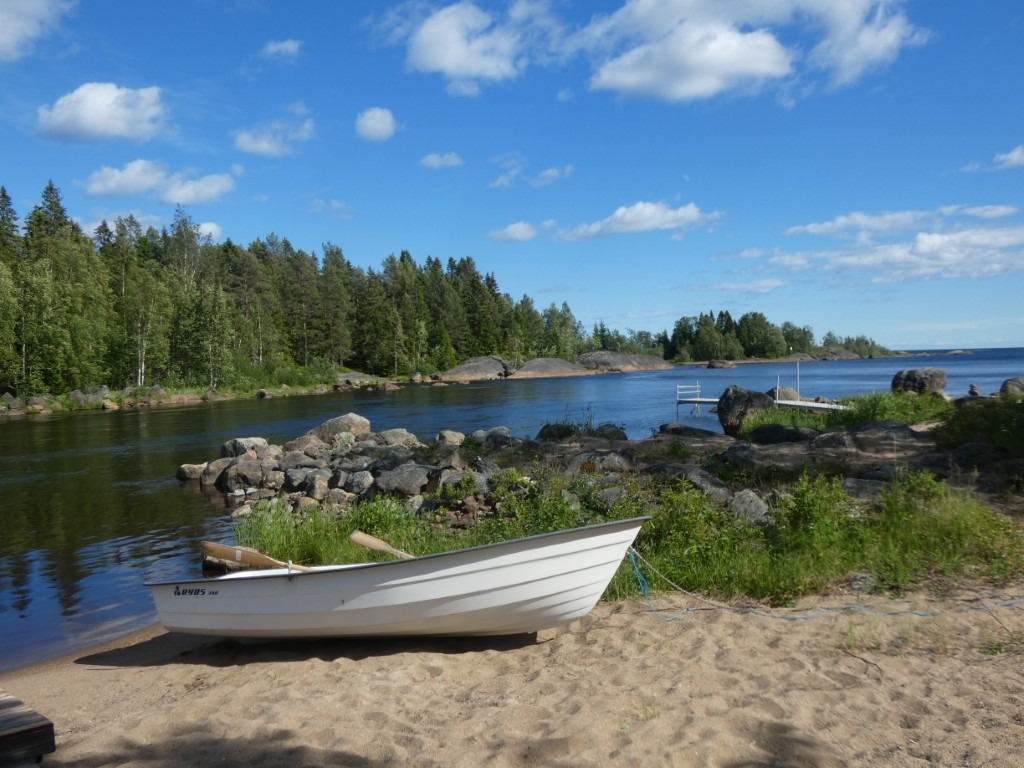
Figure 1: The destination – the view eastwards on the coast in the vicinity of Robertsfors, north of Umeå, where the Rickleån River empties into the Bothnian Bay on the Baltic Sea. This is typical of the very attractive coastal scenery in this part of northern Sweden. (Photograph; David Murray-Smith).
I spent most of June 2026 in Norway and Sweden, travelling by rail whenever possible using an Interrail global pass for travel within those two countries. Services on the main rail networks there are, of course, constrained by geographical factors resulting in steep gradients and sharp curves, with many speed restrictions.
However, I was surprised to find one relatively recent development which has changed the situation significantly for rail travellers going north from the Stockholm area to Umeå. The traditional route to Umeå was built 30-100km inland and was a relatively slow line with sharp curves and severe gradients. To improve passenger and freight services to the north, work began in 1999 on a new line, the Botniabanan AB (the Bothnia Railway). This new railway leaves the main network just north of the town of Kramfors and follows the coast for 190 km to Umeå via the port of Örnsköldsvik. The line speed is 250km/hr (155 mph) but the SJ 3000 trains used on the line at present are limited to 200 km/hr (125mph). This is currently the highest speed route in the whole of Sweden. There are plans to introduce SJ 250 trains, which are designed for 250 km/hr operation, on this route in the near future. The highest speed that I noted was 204km/h near Örnsköldsvik, although speeds around 200km/h were being maintained on many sections of the route (Figure 2).
The Botniabanan has about 25 km (16 miles) of tunnels and involved new construction throughout. The construction budget is reported as being SEK 15 billion (about £1,16 billion) which seems a remarkably low cost in comparison with HS2 and other rail developments in the United Kingdom. The Swedish government provided 91% of the costs and 9% came from the main municipalities along the route. The line is single track throughout with 22 passing loops, is fully electrified (at 15 kV) and is equipped with ERTMS (Level 2). Completion was delayed by disputes over environmental issues in the Umeå area and by delays in the installation of ERTMS south of Örnsköldsvik.
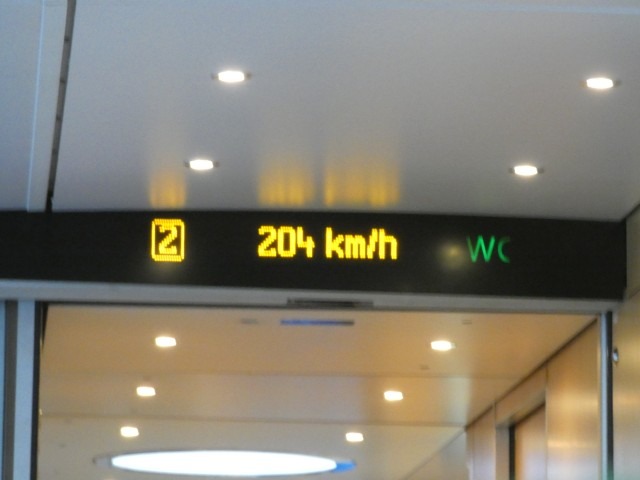
Figure 2: Speed display in northbound SJ 3000 train travelling towards Örnsköldsvik. (Photograph: David Murray-Smith).
The line passes through very pleasant coastal areas where the scenery is an attraction. Figure 3 shows a typical view from the train on the northern section of the route to Umeå.
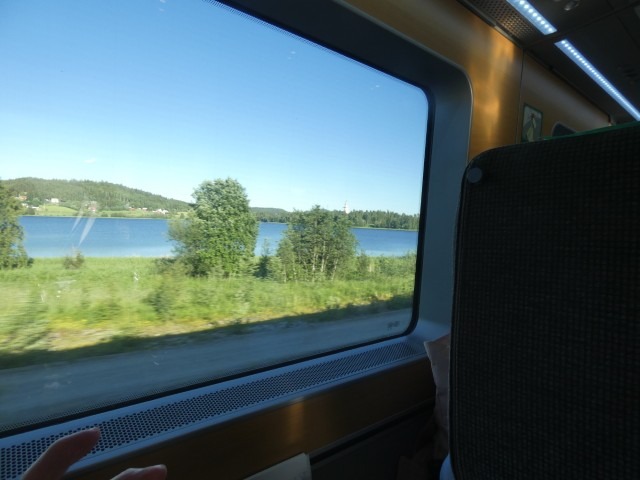
Figure 3: View from SJ 3000 train. Typical coastal scenery on the Botniabanan (Photograph: David Murray-Smith).
Although passenger traffic began over the section between Umeå and Örnsköldsvik in August 2010, services south of that station did not start until 2012.
The construction of the Botniabanan was coupled, over the period 2003 and 2017, with improvements to the existing Ådelen line from Kramfors southwards to the town of Sundsvall which is 101 km away. That existing route was upgraded for speeds up to 150km/h and ERTMS was installed. Some parts of the line (about 30km in length) were replaced by new sections constructed to 200km/h standards. The total cost was SEK 6 billion (about £463 M).
The experience of travelling on a single-track railway at sustained speeds of 125 mph requires some mental adjustments for someone from Scotland and the effect of single-bore tunnels on the ears was very noticeable. However, the SJ 3000 units used on the services at present are comfortable and very smooth-riding trains. They also have excellent and well-stocked cafeteria facilities with seating areas for those who prefer not to carry refreshments back to their normal seats. Seat reservations are required on all express services, such as those from Stockholm to Umeå.
It was exciting to find that Sweden has been investing in new railway developments and especially that these were taking place in the north of the country where population density is lower than in many areas around the capital and the coastal areas to the west and south of
the country. On reaching the Umeå area I was even more surprised to learn about another major rail project that is under way. This is the Norrbotniabanan (North Bothnia Railway) which is intended to be a 270 km (168 miles) extension of the Botniabanan north from Umeå to the city of Luleå. The plan is to cut travel times in half between the two cities for passengers and to reduce rail freight costs by 30% compared with the existing, much longer, inland route. Construction is already well under way in the Umeå area. This section of line involves a 1.6-mile-long tunnel in Umeå and the first track was installed at the Umeå end of the route in 2022. The track-bed northwards from the tunnel appears complete with catenary supports already in place, although track has not yet been laid there. There will be major stations at Skellefteå, Piteå and Luleå with regional stations at Såvar, Robertsfors, Bureå and Byske. The line will also offer significantly improved connections from Sweden to the Finnish rail network. The total cost is estimated as SEK 43 billion at 2021 prices (£3.3 billion) with funding coming from the Swedish government, regional sources and the European Union. The route will be single track throughout, with passing loops. It is hoped that construction of the northern section of the line between Skellefteå and Luleå can be started in 2033, by which time the sections further south should have been completed and in use. As on the Botniabanan, the maximum line speed will be 250 km/h (155mph).
What I found particularly interesting is the bold nature of this investment in public transport in a relatively sparsely populated past of the country. The population of the Umeå municipality is only about 135,000, while Skellefteå is about 36,000 and Luleå 49,000. These are the three major population centres on the Norrbotniabanan and it would be very interesting to find out more about the business case and the potential community and social benefits that are expected from the new railway.
In terms of tourism, many parts of the coastline adjacent to the Botniabanan and Norrbotniabanan are very beautiful and already have protection as nature reserves. There appears to be considerable potential for carefully-managed new developments to bring more visitors to that region of Sweden to enjoy the peace and beauty of the coastal area. The railway undoubtedly brings potential benefits in that respect (see, for example, Figures 1 and 4).
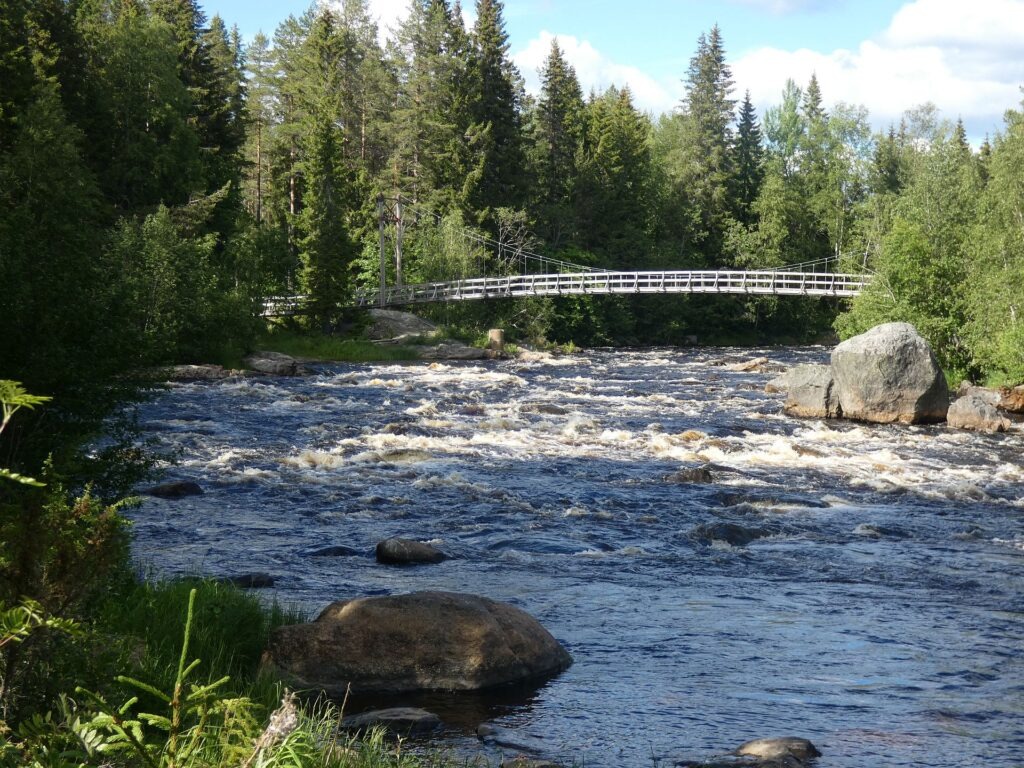
Figure 4: Rapids on the Rickleån river not far from Robertsfors. This area forms part of the Klubben Naturreservat. (Photograph; David Murray-Smith).
For those with interests in railway history, the eventual opening of the Norrbotniabanan will make the Bruksmuseum at Robertsfors much more accessible. The museum contains much of interest concerning the early industrial history of the region, relating mostly to iron smelting and timber processing, but it also includes the remains of a 750mm gauge industrial railway. This was used to transport iron and timber products between Robertsfors and the the nearby coastline at Sikeå. It closed in 1961 and is of historical importance because, about 1900, it became (or so it is claimed at the museum) the first electrified narrow-gauge railway in Europe. Fortunately, most of the locomotives, one passenger vehicle and some other items of railway interest have been preserved and are on display, under cover, at the museum. Restoration began in 1990 and about 700m of track remain. There is evidence that occasional trains have been run for visitors, although the line is no longer electrified. On my visits there were no signs of any recent movements on the line. The municipality of Robertsfors is of interest itself in that it got its name from Robert Finlay, a Scotsman who founded an ironworks there in the 18th Century, along with his brother-in-law John Jennings.
In conclusion, it is worth pointing out that there are no routes in Scotland, currently off the rail network, that have population centres as large as those on the Botniabanan and Norrbotniabanan. However, a new coastal railway from Girvan to Stranraer serving Cairnryan might be a candidate for a development here, or perhaps a new route from Dumfries to Stranraer and Cairnryan. Whether any government in Scotland or the United Kingdom would be prepared to contemplate building a new railway of any kind on those routes, even for speeds up to 75 mph, is debatable. Being bold enough to develop a railway for 155 mph operation and upgrading existing link routes to match is, however, very unlikely from past evidence.
I must acknowledge the use of Wikipedia for some of the information given above, especially distances, population figures and the details of construction costs. I also acknowledge inclusion of information from the Trafikverkeret (Swedish Transport Administration) website and from the following on-line article: P. Degerman, “North Bothnia High Speed Line, Sweden”, Railway Technology, February 27, 2024. https://www.railway-technology.com/projects/north-bothnia-high-speed-railway-line-sweden/ Accessed successfully 08/07/2026.
David Murray-Smith